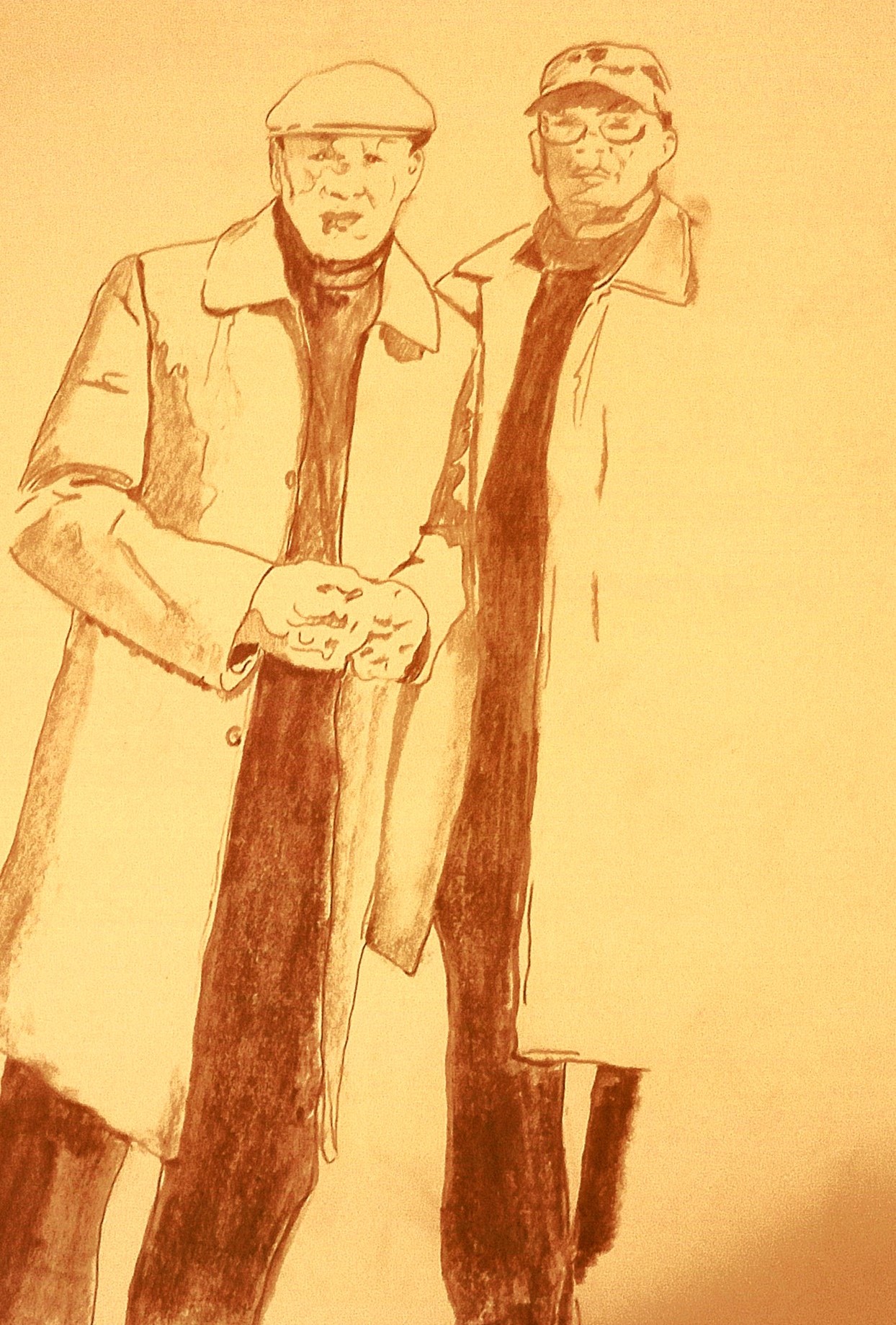

From 1652’s settler foothold to apartheid’s engineered pain, to 1994’s hopeful dawn — we carry layered debts: land dispossession, inequality, and captured institutions. Democracy survives but is strained by corruption, service failure and rising poverty. Justice demands land reform, accountable governance, and shared prosperity — not nostalgia, but radical, honest change.

THE EGOISTIC LUNACY THAT IS NETANYAHU
THE BUTCHER OF GAZA
Netanyahu has often leveraged military conflicts to consolidate power or distract from domestic issues such as corruption charges or political dissent. For instance, during periods of heightened conflict with Hamas or Hezbollah, calls for unity often overshadow internal divisions. This phenomenon allows leaders like Netanyahu to rally support around a common enemy, effectively using war as a tool for political survival.
Historical Context of Dutch Settlers
The Emergence of Afrikaner Identity
By 1700, the Dutch settlers, now largely isolated, developed a distinct identity as Christians, viewing themselves as God's chosen people. The arrival of British settlers in 1820 posed a threat to the Afrikaner identity, leading to a backlash against perceived British cultural imperialism. The abolition of slavery in 1833 intensified Afrikaner resistance, as they felt their religious and racial identities were under attack.
The Implementation of Apartheid
The Role of the Dutch Reformed Church The Dutch Reformed Church (DRC) played a significant role in shaping Afrikaner identity, reinforcing the notion of racial superiority. The church's policies led to a split, with some advocating for missionary work among non-whites while others resisted integration
Resistance and Change
Educate to Indoctrinate
Colonizing the mind is a subtle form of political, economic, cultural, and religious control. It can also be described as a form of epistemic violence.

Colonization of the African mind
The ideological domination of the African psyche, which separated indigenous Africans from their culture and resources

Research reveals violence can heighten national elites’ anxiety about the masses’ moral character and the state’s ability to maintain social order. In this context, public education systems were created and expanded to teach obedience

Bread and Circuses – The Welfare State
“Bread and circuses” is a pejorative metaphor for political strategies calculated to appease a population and divert attention from controversial or failed policies with populist welfare programs and low quality entertainment and distractions. Public support is thus created not through exceptional public service and effective public policy, but through diversion, and patronage.
As a political strategy, bread and circuses transcend time and space. In Spain the saying takes the form of “pan y toros” (bread and bullfights), elsewhere as “pan y fútbol” (soccer), and in Russia as “bread and spectacle.”
SA is a "high leisure preference society", which makes us susceptible to bread-and-circus politics
We have a taste for public spectacles and so are easily seduced by the policies once practised by the caesars of Rome, who used "bread and circuses" to win support and legitimise their authoritarianism, rather than relying on democratic consent
Becoming Complacent
People can become complacent in the face of oppression due to a combination of factors including: a sense of hopelessness, learned helplessness, fear of retaliation, exhaustion from constant struggle, internalized oppression, the illusion of progress, and a lack of visible pathways to change; essentially, when faced with seemingly insurmountable challenges, individuals may feel powerless to act, leading them to accept their situation rather than actively resist it

Roxane Gay
“All too often, when we see injustices, both great and small, we think, That’s terrible, but we do nothing. We say nothing. We let other people fight their own battles. We remain silent because silence is easier. Qui tacet consentire videtur is Latin for ‘Silence gives consent.’ When we say nothing, when we do nothing, we are consenting to these trespasses against us.”

Ashley Abrahams
ons hoor mos, issie onse problem nie hulle het self daa na gemaak, issie osse problem nie, issie osse problem nie, as die man die vrou slat issie osse problem nie, as 5 mense in een kamme moet slaap issie osse problem nie, as die baas se ek kan nie die maan jou volle salarie betaal nie... issie osse problem nie issie osse problem nie as 54 learners n klas moet deel issie osse problem nie.... issie osse problem nie.. issie osse problem nie. MA AS JY GAN VAL VI ALLIS STAAN JY VI NIKS
J IN G LE H E L L
HOW UNEQUAL IS SOUTH AFRICA

South Africa has one of the largest gaps between the rich and poor in the world, with the top 10% of the population controlling a significantly larger share of wealth compared to the bottom half

South Africa is considered one of the most economically unequal countries globally; this disparity is often attributed to the legacy of apartheid policies that restricted opportunities for the majority of the population.
A Christmas feeding frenzy

A NOT SO XMASS
Not every South African family will experience the joy of Christmas in the comfort of a decent home this year.
Many live in shacks made of combustible materials, iron zinc fragments and cardboard – exposed to the elements and vulnerable to crime, illnesses, injuries and death. For them, Christmas is not an enjoyable experience in a family home of their own.

Effects of poverty on a child
Feelings of isolation and stigma due to socioeconomic status. Difficulty forming healthy relationships and social interactions. Increased exposure to violence and instability in the community Addressing child poverty requires comprehensive social policies aimed at providing access to quality healthcare, education, housing, and income support.
12 million South Africans live in extreme poverty

If there appears to be little progress or no clear path towards improvement, individuals may become discouraged and feel that their efforts are futile.
A state is held to have failed when:
It loses control of its borders;
The erosion of legitimate authority is increasing;
It is unable to deliver basic public services as defined in the Constitution;
Political corruption becomes endemic.

THE GREAT SOUTH AFRICAN AUCTION
Add your own block subtitle
ENLIGHTEND ACTION GROUP
Artistic Reflections in Cape Town
Explore modern-day society and cultural identities through art that challenges conventional norms. redefine art in contemporary society.

KLEP TOCR ACY
Kleptocracy is a form of government corruption but unlike more typical instances, such as a politician taking a bribe, kleptocracy entails the systematic use of the government's powers to enrich political leaders.
Kleptocracy (from Greek kléptēs,

"TO NOODLE OR NOT TO NOODLE"
Food poisoning incidents treated as national security threat
In South Africa, food poisoning is a notifiable disease, but the surveillance system is not effective. South Africa reports just a few hundred cases of food poisoning per year, whereas the incidences are more likely to be in the region of hundreds of thousands of cases.
STOLEN LAND
HANDFULL OF SAN
Forcefully take control of a territory that belongs to another people, usually Indigenous communities, through military conquest or political manipulation, claiming it as their own and displacing the original inhabitants from their ancestral lands.

The Khoisan people lost their land due to European colonial settlement, particularly by the Dutch, who took over large tracts of land in South Africa, displacing the Khoisan population through a combination of land seizure, violent conflict

When the Dutch established the Cape Colony in the 17th century, they began taking over Khoisan grazing lands for their own farming operations, forcing the Khoisan to move further inland.

In around 2300 BP (Before Present), hunter-gatherers called the San acquired domestic stock in what is now modern day Botswana. Their population grew, and spread throughout the Western half of South Africa. They were the first pastoralists in southern Africa, and called themselves Khoikhoi (or Khoe), which means

MALE-DIC-TION HER-ASS-ER
"HER BODY IS NOT A CRIME SCENE"
In Africa, the most prevalent forms of Violence Against Women and Girls (VAWG) reported and documented, include, among others, Intimate Partner Violence (IPV), which manifests in physical, sexual or psychological violence by an intimate partner; Female Genital Mutilation (FGM), which is a common cultural practice in some parts of Africa; Early Child and Forced Marriage where girls below 18 years are forced into marriage; as well as Sexual Violence in Conflict (SVC) which includes rape, sexual assault with violent physical assault, kidnapping, sexual slavery and forced prostitution in conflict situations.
The persistence of VAWG in Africa is mainly associated with gender power relations reflected in well and commonly ascribed and accepted social norms, entrenched in patriarchal systems characterized by male dominance, unequal distribution of resources and power combined with social institutions that sustain gender inequality. These norms in the name of culture, dictate behaviors and attitudes that perpetuate stereotypes which are the most significant barriers to eliminating and preventing VAWG. Poverty and lack of income and assets add to women’s vulnerability to violence.
The rights of women to physical and psychological integrity are often compromised when women are subjected to violence and violations, which often happen in the context of violence against women, harmful traditional practices, poor health services and sexual violence including during armed conflict. The African Union (AU) views Violence Against Women and Girls as one of the critical impediments to women’s realization of their fundamental rights including the rights to life, human dignity, peace, justice, socio- economic and political development.
NOT IN MY NAME

The facts are astounding.
Experts estimate that 1 in 10 children are sexually abused before their 18th birthday.
30% of children are abused by family members.
As many as 60% are abused by people the family trusts.
About 35% of victims are 11 years old or younger.

Six Warning Signs of Isolation and Emotional Abuse
1. Your partner insists on as much one-on-one time as possible
2. Your partner refuses to interact with your friends and family
3. Your partner invents reasons why you should not see friends and family
4. Your partner uses jealousy, guilt, or other emotional manipulation
5. Your partner checks in on you constantly
6. Your partner insists on knowing all your passwords

Suffering Alone: The Impacts of Isolation on the Mental Well-Being of Victims and Survivors of Relationship Violence

Suffering Alone: The Impacts of Isolation on the Mental Well-Being of Victims and Survivors of Relationship Violence

Enforced social isolation as a contributory factor in child abuse
Isolation reduces the opportunity of the abused to be rescued or escape from the abuse. It also helps disorient the abused and makes the abused more dependent on the abuser. The degree of power and control over the abused is contingent upon the degree of their physical or emotional isolation.

Unveiling Art's Societal Reflections
Based in Cape Town, I delve into art that challenges norms, questions beliefs, and redefines boundaries. My work explores cultural identities, critiques social structures, and aims to provoke thought. Through compelling creations, I aim to spark conversations and offer fresh perspectives on modern-day society. Contact abrahinvestigate@gmail.com to experience the transformative power of art .
To the people of the Western Cape, particularly those residing in the Cape Flats ,
For too long, the shackles of oppression have bound us, silencing our voices and undermining our humanity. The systems of tyranny, racism, and classism have ravaged our communities, leaving the poor, homeless, and marginalized to suffer.
The Western Cape, once a beacon of hope and promise, has become a bastion of inequality. The wealthy and white elite have long held power, perpetuating a class-based system that neglects the rights and dignity of the poor and vulnerable.
We, the people, have had enough. It's time to rise against these oppressive systems and demand a better future. We will no longer be silenced, ignored, or dismissed.
Our Demands:
1. Equal Rights and Opportunities : We demand equal access to education, healthcare, and economic opportunities, regardless of race, class, or socio-economic status .
2. An End to Racism and Discrimination: We reject the racist systems that have oppressed us for far too long. We demand an end to discriminatory practices and policies that perpetuate inequality.
3. Affordable Housing and Sanitation : We call for the provision of affordable housing, adequate sanitation, and basic services for all, regardless of income or social status.
4. Accountability and Transparency: We demand that those in power be held accountable for their actions. Transparency and good governance are essential in ensuring that our voices are heard and our rights respected


fSlAg
burning liquid iron was forming a scum of slag

A FATHERS TOUCH
As a father, it's crucial to actively teach your son to reject harmful gender stereotypes and actively work to stop the cycle of Gender-Based Violence (GBV) by fostering healthy relationships, promoting respect for women and girls, and speaking out against any form of abuse, setting a positive example through your own actions
Equality and Respect: Teach your son that everyone, regardless of gender, deserves to be treated with respect and equality.
Consent is Key: Explain the importance of consent in all relationships and always respecting boundaries.
Challenge Harmful Stereotypes: Address and challenge traditional gender roles that might perpetuate violence, like the "tough guy" mentality.
Open Communication: Encourage open dialogue about emotions and feelings, creating a safe space for your son to express himself healthily.
Empathy and Perspective Taking: Help your son understand the perspectives of others, especially women and girls, to foster empathy.
Active Bystander Intervention:Teach your son to intervene if he witnesses potentially abusive behavior, whether from peers or others.
Role Model Positive Behavior: Demonstrate healthy relationship dynamics with your partner and other women in your life.
How to implement this teaching:
Discuss Current Issues: Talk about real-life examples of GBV in the news or community to encourage awareness and critical thinking.
Read Books and Watch Movies: Utilize age-appropriate media that addresses themes of healthy relationships and gender equality.
Incorporate into Everyday Life: Discuss situations that arise in your daily life where gender stereotypes or inequalities might occur, and encourage your son to reflect on how to respond positively.
Seek Support: If needed, consider attending workshops or programs focused on preventing GBV specifically designed for men and boys

Effects of Child Sexual Abuse
Some of the symptoms of survivors syndrome include: Relationship problems—fighting, blaming, mistrusting, poor communication skills, difficulty with intimacy. Low self-esteem—self doubt, self blame, shame. Self-sabotage—self-destructive or self-mutilating behavior.
The experience of child sexual abuse can change the way a child understands their world, the people in it and where they belong. Their understanding of themselves and the world around them can become distorted, and create feelings of mistrust, fear, and betrayal. Depending on the relationship and duration of the sexual abuse, subsequent relational trauma could affect their ability to connect with others and themselves. Their personality and behaviour might change markedly from what they were prior to the abuse.
The manipulative nature of grooming that many sexual offenders use to get close to their victims can cause ongoing thought distortions, self-identity issues, relational harm and isolation of the child.
Child sexual abuse is associated with many different negative impacts including medical, psychological, sexual, self-harm, and others. Adult survivors of child sexual abuse may experience sexual disturbance or dysfunction, depression, and anxiety. Research has found that anxiety, fear, and suicidal ideation and behaviour are more likely in instances where the perpetrator used force and threat of force. The age of onset of the abuse, duration and outcome is characteristic of higher trauma symptom levels. For example, the longer the duration of the abuse the greater impact on the child’s identity.
As an all-too-common occurrence across the country, domestic violence is an uncomfortable feature of many South African homes. children the silent victims,
Anxiety
Post-Traumatic Stress Disorder
Aggressive Behavior
Physical Abuse
Long-Term Effects of Witnessing Domestic Violence as a Child
Depression
Health Problems

MOSAIC’s mission and strategic objectives are focused on strengthening the system for the prevention and response of domestic and intimate-partner violence in its socio-economic and political context. We strive to advance the vision of creating a more gender-equal society where vulnerable people, especially women and children, are safe from abuse and violence in their relationships, homes and communities. Our vision is anchored by four approaches that are cross-cutting in our services, training, mobilisation, convening, communication and advocacy work.
Cape Town (Head Office)
66 Ottery Rd
Wynberg
7800
+27 (0)21 761 7585
Cesvi Foundation - South Africa
The House of Smile - Khanyisa Centre was initiated in 2007 as a community response to domestic violence, HIV/AIDS, child abuse and to provide a safe home for women & children in Philippi, Cape Town.
New Eisleben Rd &, Mpumelelo St, Philippi, Cape Town, 7750

Rev M.S Lugongolo Foundation
To create a communityfree from drugs, crime, women and children abuse, in which all people will share equal opportunities regardless of gender, sexual preference or age and race.
Phone Number
+27 64 018 3227
E-mail
info@lugongolofoundation.org.za


South Africa in Winter
The falling The failing The ...


Challenge, Critique, Draw Attention to Social, Political, and Environmental


Mxolisi Nyezwa
"driven by cold emotions into the shades and shadows
of a dying land, we had words that choked to be said –
and we never said them."


Superscript
Block title
This is a block description. To edit, click and type the text or replace it with your own custom content

Category
Service 1
This is a service description. Add more detail about this service, such as benefits, appearance, components and value

Category
Service 2
This is a service description. Add more detail about this service, such as benefits, appearance, components and value

Category
Service 3
This is a service description. Add more detail about this service, such as benefits, appearance, components and value
https://theconversation.com/james-matthews-the-rebel-writer-who-was-south-africas-voice-of-resistance-238519
James
"In South African literature he is part of a generation of pioneering black writers who truly established a tradition of resistance writing in the 1950s, 1960s and 1970s. His works were among the first to be banned by the apartheid government, and he was an important voice of dissidence during a very difficult time in the country.
Internationally he has been recognized as a person of extraordinary courage and honored for his consistent commitment to the values of justice and humanity."


If you tremble with indignation at every injustice......."che"
Sudáfrica en invierno
La sangre de siglos, lágrimas de desaparición


OPPRESS EXPLOIT
AMERICAN GREED
CRUSH BURDEN BY ABUSE OF POWER


Render the Western Cape ungovernable:
A rallying cry from the anti-apartheid struggle during the 1980s
DEMON ALLIANCE


SKADU


CORNERED

Explore art reflecting societal narratives through our unique perspectives in Cape Town.
Diverse Art Forms
Variety of mediums and styles capturing modern-day society's essence.
Cultural Identity Exploration
Critically examines personal and cultural identities within our artworks.
Social Critique
Challenges social and institutional norms, advocating for change through art.
Artistic Innovation
Constantly redefining the boundaries of art and creativity in our work.
Some Feedback
Sara J.
Ashley's artwork beautifully captures the essence of societal dilemmas.
David R.
Ashley's artistry challenges the norms and provokes critical thinking effortlessly.
Grace K.
Ashley's creations resonate deeply, reflecting the soul of our modern era.
James M.
Ashley's pieces redefine the boundaries of contemporary art and culture.
Get in Touch with Ashley Abrahams
Connect with us to explore art reflecting modern society and personal identities in Cape Town.
FAQs
Common questions to provide clarity and assurance.
How does art reflect modern-day society?
Art mirrors contemporary ideals, struggles, and triumphs in society.
Can art help redefine societal structures?
Yes, artists often challenge norms, prompting societal reflection and change.
What is the role of art in exploring personal identity?
Art serves as a platform for individuals to delve into their cultural and personal roots.
How can art critique social injustices?
Artists use their creations to shed light on inequalities and challenge oppressive systems.